

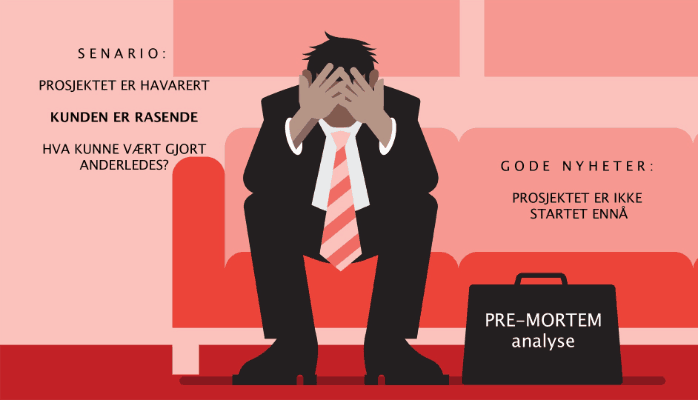
Imagine a situation where a project has failed. Nothing of value has been produced, at costs no one anticipated. The client is furious, the project manager is hiding, and the team is frustrated. The natural question is "Why?". The "Pre-Mortem" method can help prevent this scenario from becoming a reality.
The Pre-Mortem method can be seen as a form of risk analysis, but staged and dramatized in a different way than a classic risk review.
Tips for the exercise:
Information gathering
- Include all possible events that could hit the project and lay the groundwork for the disaster you are imagining. Make sure to include both general and specific causes that led to the failure.
- Feel free to problematize, but make sure to come up with alternatives that would have averted the disaster (mitigation), a backup plan, or the best approach to handle the disaster when it strikes
- Include an analysis of all stakeholders in the review to explain why it went so wrong
- Feel free to address organizational causes inside and outside the project
- It is common to only point fingers at external players and high-level risks that the project had no measures against. Try to avoid that.
- Focus on the issue or role, not the person.
- An explanation of why things went wrong is usually part of a chain of events. Go into detail.
- Tell project and program risks apart.
- Highlight what it means to YOU if the project is a total failure and why YOU should have put time and effort into helping the project succeed.
Prioritization
Focus on problems that are considered top 10 in terms of the likelihood of occurring and that could potentially become a "showstopper" for the project. Remove problems you already control.
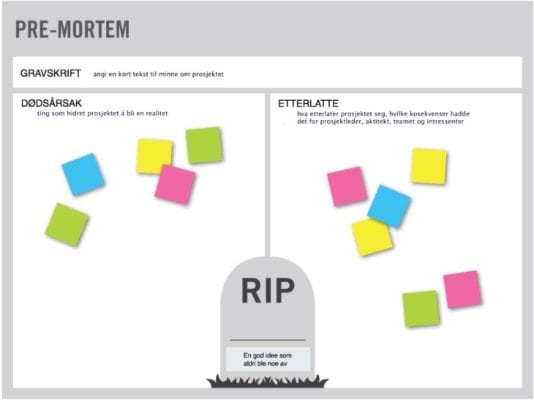
The Result
All explanations should be generalized, categorized, and added to the project or program risk register. Then, kick off corrective measures to ensure you don't end up in the situation just described, or make sure you have a plan for what to do when it happens.
Like any methodology of this type, it takes a certain level of organizational maturity to get the most out of such an exercise.